




Facade of a concrete corporate building under a white sky

01.2 · Owning and operating, and what that form requires.

A mixed holding company

Calaa Capital holds the group's companies and directly operates three divisions. That dual condition decides who settles each matter, with what latitude and in how much time. From it follow the structure of the group and the speed at which each decision is executed.

5
companies
3
divisions operated
2
ways of running them within one company

The parent does not run the two halves of the group the same way, and the difference is not one of style. It changes who decides, what it is measured against and who answers for the outcome.

It sets the framework in one half of the group and decides daily in the other

Appoints and measures

Over the holdings it sets the framework and measures

Over the four holdings, Calaa Capital provides capital, appoints management, approves the annual plan and demands results against it. Day-to-day management stays with each company. That distance is deliberate. A parent that settled the day-to-day of four companies would stop being the body that decides where capital goes and become the point everything has to pass through, with the whole group moving at the pace of a single agenda. A shareholder sets the framework and measures. Once it also executes, the framework ceases to exist.
Decides and answers

Over the divisions it decides and answers without intermediaries

The three divisions are part of Calaa Capital. There is no intermediate board to report to and no plan to negotiate between two companies. There is a management team that decides and a set of accounts measured with the same rigour as a holding's. What happens inside a division is the parent's direct responsibility, and so is the cost of it not happening. That is the trade-off for being able to decide without intermediaries.

The two halves of the group

The group is five companies and three divisions, and Calaa Capital is one of the five

The group's five companies, Calaa Capital among them, and the three divisions the parent operates within itself.

Appoints and measures

5Companies

Decides and answers

3In-house divisions

Calaa CapitalThe parent
Calaa MindLa consultoría
Calaa LabLa ingeniería
Calaa EdgeLa incubadora
CalaaLa capa de inteligencia
Cal-1El producto
Calaa RoboticsEl hardware
Calaa ParkEl inmueble
In a holding companyOne or two quarters
In a divisionThe same week

Half the group is run from a board and the other half from a desk. That is what a mixed holding company means, and it is why Calaa Lab, Calaa Mind and Calaa Edge have their own name, team and accounts without being separate companies.

One half of the group is governed from a board and the other from an executive management team. That the two coexist within the same company is what makes this parent a mixed one, and explains why the same decision is executed in weeks on one side and needs months on the other.

The two ways of running them

Building a tool the group needs travels a different path depending on which side it falls. Neither is better. What changes is what each one buys.

The same investment is four steps on one side and six on the other

The path of an investment decision

How many steps separate a proposal from its execution

Path of an ordinary investment decision. Excludes matters reserved to the board by law or by the articles.

In a division

The same week

4steps

01Management proposes it
02The parent decides
03The budget is allocated
04It gets built

In a holding company

One or two quarters

6steps

01Management proposes it
02The parent takes it to the board
03The board approves it
04Management plans it
05The company's budget is allocated
06It gets built

The short path is not a privilege. It is what is paid for not having a body of one's own to protect a company's plan against the group's priorities, and the long path buys exactly that. A mixed parent chooses a path every time it decides where to place a new activity.

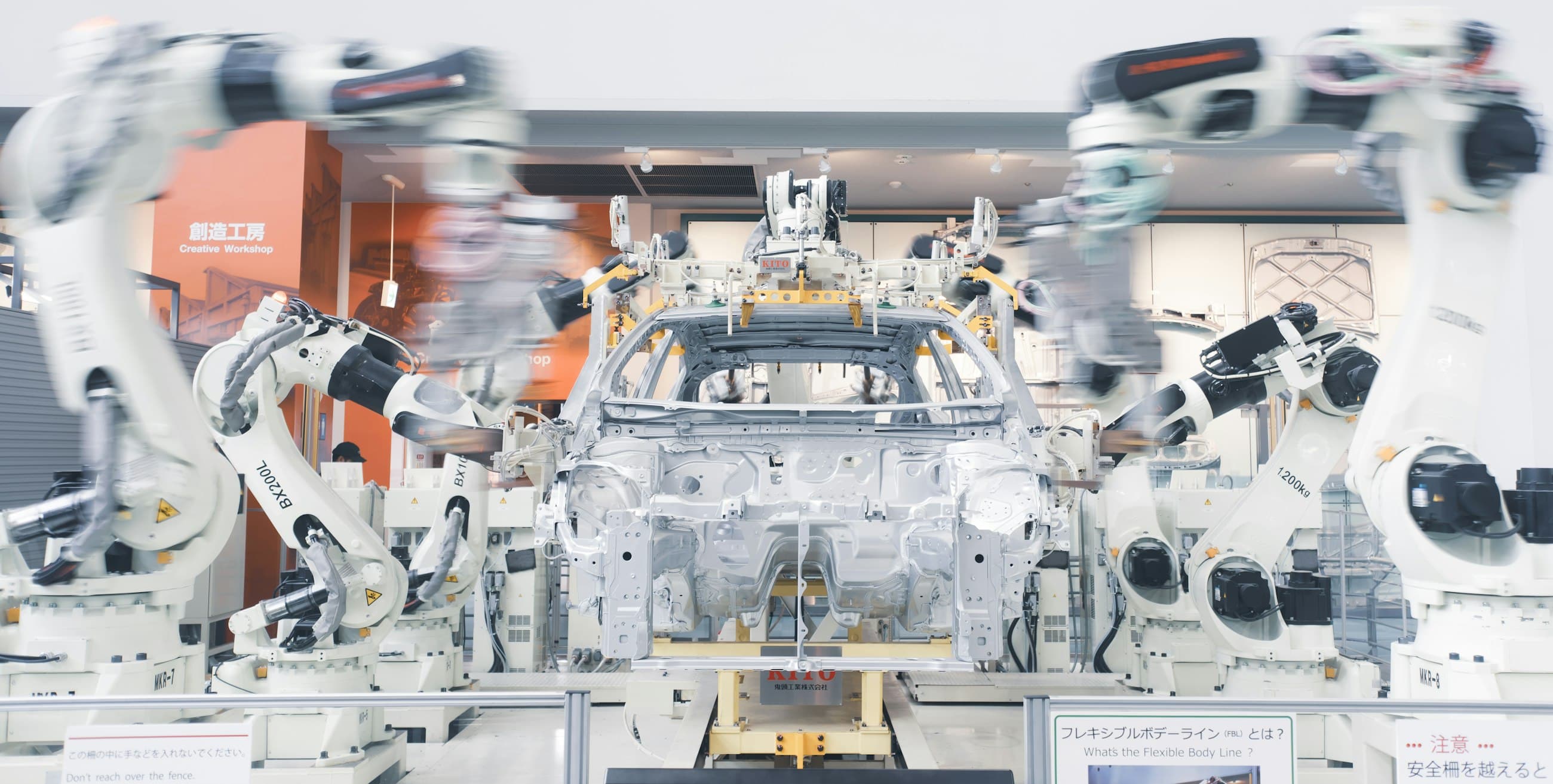
A car assembly line: robotic arms working over a body shell in motion.

The three divisions do not report to a board. They report to the same management that decides where capital goes.

The two ways of running them

The three alternatives are ruled out for what they would do to execution, not for what they would say on an organisation chart.

The three alternatives are ruled out for what they would do to execution

  1. A parent that only owns depends on convincing each holding

    Owns only

    A parent that only owns depends on its holdings undertaking what the group needs, and to get it must convince them one by one. With divisions of its own, what the group needs to build is built by direct decision, without prior negotiation and without surrendering the timetable to four boards.

  2. A single company subjects different tempos to the same timetable

    Everything in one

    A single company runs very different activities with the same body and the same timetable. Manufacturing an object, advising a company in the sector and managing a building move at tempos that do not coincide, and under one management they end up competing for the same attention. The one that loses is always the one that takes longest to show a result.

  3. One company per activity asks for two approvals for almost everything

    One company per activity

    Giving each activity its own company looks orderly and produces the opposite. Every decision crossing two activities then needs two bodies to approve it, and in a group building pieces that depend on one another that is almost all of them. The structure adopted is the smallest one that allows the plan to be executed.

Sustaining two ways of running companies within one company means keeping two disciplines at once. The shareholder's sets objectives and does not intervene. The operator's decides daily. The standing temptation is to apply the second to the holdings and govern them as if they were divisions.

The distance from the holdings is not held in place by the structure

It shows in three places, and all three can be checked from outside. When the parent asks a holding for a detail its management has already settled. When an approved plan is reopened outside the agreed timetable. And when a decision that belongs to the board is communicated before the board has seen it.

The structure does not prevent it on its own. The discipline of not doing it does. A parent that skips its own distance leaves four management teams without the power to decide they were appointed for.