





The ambition, and how to judge it
Impact
Five fronts, and none of them is written in the present tense. Each one carries the mechanism by which it would happen and what would disprove it.
- 5
- fronts, each with a different mechanism behind it
- 4
- claims that state in writing what would disprove them
- 2
- years is the horizon within which the first one can be checked
They describe the effect the group's work would have if it turns out as set out here. None of them is an achieved result.
The five fronts are written in the conditional
Four sections, one per front, each with its mechanism and with what would disprove it.
Four fronts, and all four come out of the same structure
The four fronts
None of the four comes ahead of the other three
The four fronts on which the group claims it would have an effect. It places them on what supports them; it ranks none of them.
That all four are the same size is not an omission. There is no principal front, and publishing a priority that has not been decided would claim more than there is.
Five, and all five start from the same place: sector information ceasing to be scattered. What changes from one to the next is who has to move for it to happen.
The five fronts
Transformation of the industry
New business models, such as mobility as a service, car sharing, subscription and connectivity. Efficiency across the value chain, and answers tailored to each customer instead of one product for everyone. It requires the professional who decides today on experience to decide on measurement.
Impetus for the digital economy
Adoption of emerging technologies in a sector that comes late to them, development of the infrastructure that connected mobility needs, and platforms that make better use of resources that already exist. It requires a third party to decide to build on a platform it does not control.
Employment and opportunity
Roles in research, technology, production and management, plus the indirect ones at suppliers and in the sectors that grow around them. It includes support for entrepreneurship in the sector through Calaa Edge. It requires building a crossover of disciplines that today is taught in two separate degrees.
Sustainability
Advancing the electric vehicle, the circular economy in the industry and efficient driving, as well as reducing the footprint of our own operations. The decision sits with whoever compares the cost of repairing with the cost of replacing.
Community
A global community of motoring enthusiasts that today lives scattered across forums, portals and apps that do not talk to one another. Bringing it together is the first reason Cal-1 exists. It requires someone already active on several channels to concentrate that activity on one.
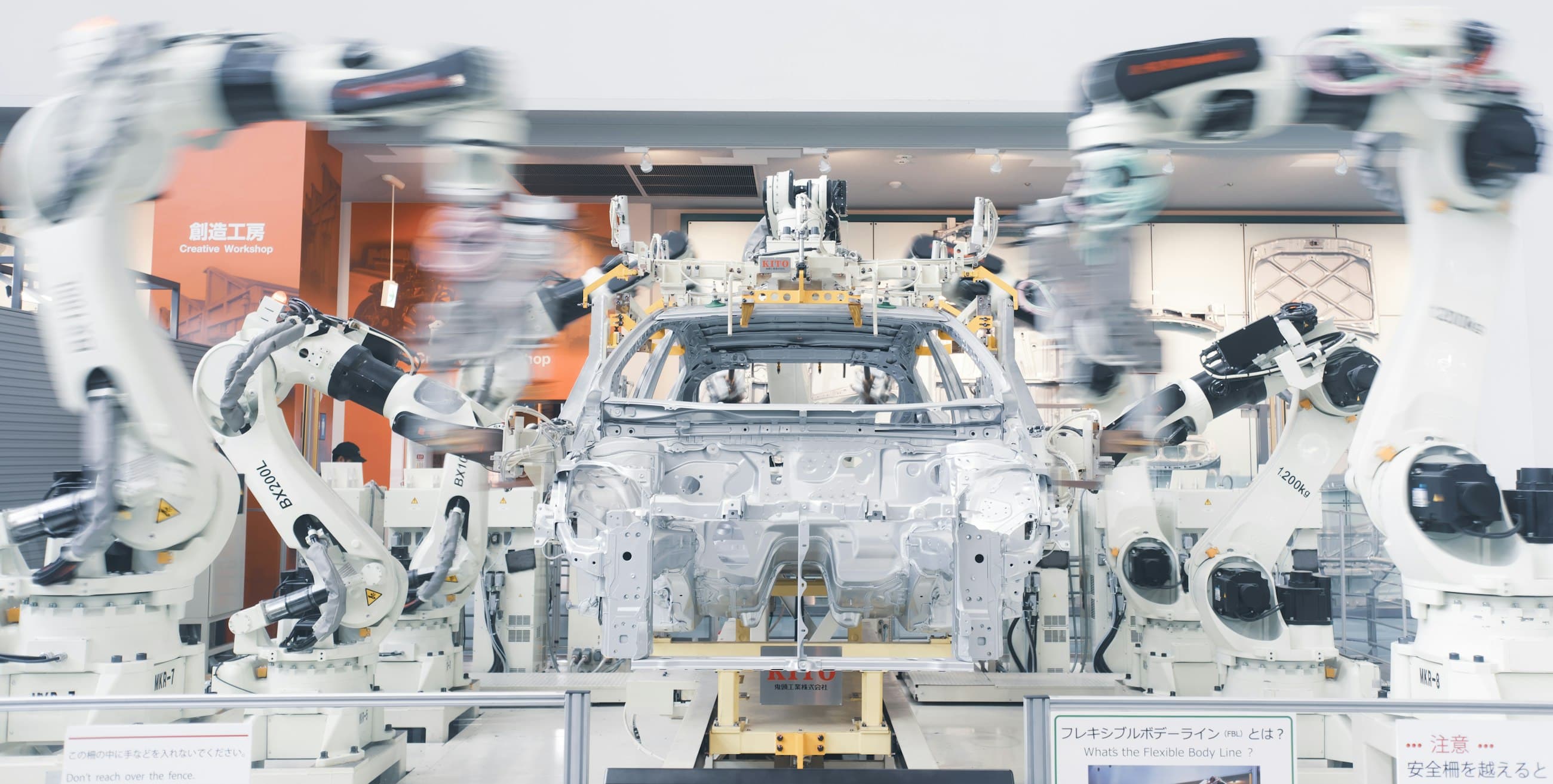
07.1
What would change in the automotive sector.
Change reaches the workshop before it reaches the factory
The sector does not have a technology problem, it has a scattered-information problem. A group like this one does not change how vehicles are built. It changes what the industry that sells, repairs and insures them knows about itself. All three operations take place on the same vehicle and are recorded in systems that do not know one another.
Industry
By which mechanism it would happen
A stocking decision stops being taken by estimate
Today a dealer decides its stock on its own experience and on registration data that arrives late and aggregated by make and model. With continuous measurement of real behaviour, that decision moves from estimate to measurement. The change happens in that decision. The difference shows in the vehicle that has been ninety days on the forecourt, because whoever bought it had no way of knowing that in their area that model turns over half as fast. Across a dealer network that difference is not shared evenly, and it is absorbed by whoever has the least margin for error.
Aftersales becomes measurable
Spend per vehicle per year is the figure that weighs most on a workshop's accounts and the one least published. Measuring it changes who can plan and who cannot. A workshop that knows next quarter's workload buys parts ahead and negotiates price; one that does not buys in a hurry and takes the price it is given, and that difference compounds every month. It is also the figure a manufacturer does not see either, because its relationship with the vehicle ends with the warranty and the vehicle's life runs on for another twenty years.
The electric vehicle forces the sums to be redone
It changes who repairs and how much is repaired. An electric vehicle has fewer wear parts and a shorter service schedule, so the part of a workshop's business that lived on mechanics narrows while the part that depends on electronics and diagnostics grows. A sector that cannot measure that shift discovers it once it has already happened, and by then the investment it needed no longer arrives in time. The investment needed is training whoever uses the machine, and that takes longer to pay off than buying it.
3
mechanisms, and all three begin by measuring something that today is estimated
2
years is the horizon for knowing whether the first one occurred
1
data point decides whether a workshop plans or buys in a hurry
From estimated to measured
The three mechanisms start from the same point, a figure that today is estimated
What changes level in each of the three mechanisms in this section. It marks the step; it does not say how much any of them improves.
What would disprove this
That professionals do not switch source even when the new one is better. The inertia of a sector with tight margins is real, and no amount of data defeats it on its own. A workshop that has spent fifteen years deciding by habit does not change because a better tool exists; it changes when that habit visibly costs it money. If in two years information is still being decided by habit, this ambition was wrong. What can be measured sooner is whether the data arrives and whether it is better than what was there, and that can be checked from the first quarter.
07.2
What gets built around it.
Infrastructure arrives after the product that justifies it
A product that brings a sector together also moves whoever builds on top of it. It is the effect most announced and least explained, so this front sets out why it would happen in this case rather than why it would be desirable.
The digital economy
By which mechanism it would happen
Because there is a channel to publish on
A workshop, a driving school or a motoring outlet has no shared channel today on which to reach its audience. Each pays for its own visibility and competes for the same attention on channels it does not control. Bringing that together lowers the cost of entry for anyone wanting to start up in the sector. What today costs a campaign becomes a matter of being where the person searching already is. Today, whoever starts up in the sector pays to be known before knowing whether there is demand.
Because the incubator is part of the group
Calaa Edge does not only fund. It connects with a group that develops, manufactures and distributes. A project outside the group would take a year to have something to show and inside it has it in months, and that difference decides how many times it can be wrong before its funding runs out. For a project starting out, access is worth more than the same amount of money with nothing behind it. That access cannot be bought. An outside supplier sells manufacturing hours, not the conversation with whoever decides what gets made.
Because what is learned can be shared
What the group understands about the sector does not have to stay inside. Publishing it with a byline, a date and sources lets it be used by whoever is building something else, and that multiplies what a single group can do. A sector figure known only to whoever measures it is worth something to one company; published, it is worth something to every company that decides with it, and one of them ends up building something the one who measured it would not have built. It is also the most checkable part of this front, because what is published stays with its date and anyone can go and see whether it was there.
1
shared channel for trades that today pay for their visibility separately
2
contributions from the incubator, on top of the funding
3
years is the horizon given to disprove it
Three audiences, one channel
The effect appears when the three audiences are the same, not when they are added up
Where the three trades named in this section reach their audience today. It places; it does not measure any audience.
What would disprove this
That the ecosystem does not appear. Bringing a sector together on a shared channel does not guarantee that anyone builds on top of it. There has to be something to gain, and that depends on the audience existing before the first party that builds, which is the harder order to achieve. If in three years no one is building on this, what was built was a product with users and not a platform. The order matters for judging it. If at three years there is an audience and no one building, the failure is in the incentive; if there is not even an audience, the failure came earlier and lies in the product.

07.3
Which part of this is genuinely measurable.
What can be counted here is the service life of the fleet
Three measurable fronts, and none of them is an emissions promise. They are the three points where this group's work touches a vehicle's footprint, and all three can be checked against data that already exists. A vehicle's footprint is not decided at the exhaust pipe alone. It also depends on how many years it lasts and on whether it gets a second life.
Sustainability
By which mechanism it would happen
Extending a vehicle's life
A well-maintained vehicle lasts longer, and maintaining it well depends on knowing when. It is the most measurable of the three. If telemetry warns before something fails, the effect can be counted in repairs avoided and in breakdowns that never immobilised the vehicle. The difference between changing a part in time and changing it once it has broken two others is cost for the owner and material for everyone. The warning also reaches whoever pays, who is the one who decides, rather than a report someone reads a year later.
That a sound used vehicle is sold rather than scrapped
A good share of a vehicle's footprint sits in building it, so every further year it stays on the road spreads that footprint across more kilometres. A second-hand market with better information extends the service life of the fleet, because what depresses the price of a sound used vehicle today is being unable to prove it. A verifiable history is worth more to the environment than to the seller. It works both ways, because a used vehicle with a demonstrably poor history also stops selling high, which is what cannot be done today.
Infrastructure that does not grow by default
A group that shares infrastructure consumes less than one where each company builds its own. It is the only one of the three that depends on the group alone; the other two depend on someone outside deciding differently. What is saved here does not change the sector, it changes what it costs to run the group itself.
3
fronts, and all three can be checked against data that already exists
1
can be counted directly, in repairs avoided
2
of the three depend on the fleet lasting longer
What each front hangs on
Two of the three only hold up if the fleet lasts longer
Which assumption sits beneath each of the three fronts. It flags the dependency; it does not quantify any footprint.
What would disprove this
That this group reduces emissions in the automotive sector. It does not reduce them; it measures them better and makes it possible to decide with more information. The three fronts in this section are written on what can be counted, and confusing measuring better with reducing would mean claiming as our own a change the sector decides.

07.4
What kind of work it creates, and where.
The profile needed is trained in-house or does not exist
«Creating quality employment» says neither how much nor of what kind. This front sets out what kind of work the group creates, where, and what has to be known to do it. The three profiles have one thing in common: none of the three is found ready-made on the market.
Talent
By which mechanism it would happen
Engineering that knows the vehicle
The profile this group needs understands development and understands the engine. Both competences at once are scarce, which is why it is trained rather than recruited. A software engineer who does not know what a fault code is builds a tool the workshop does not use, and a workshop technician without databases cannot turn what they know into something that scales. The crossover is taught, and teaching it is part of the work. Building that crossover takes time, and meanwhile the cost of a bad hire is higher than in a role the market does know how to assess.
Manufacturing next to software
Calaa Robotics does not build a generic object. It builds a device that exists to capture data, so the decisions on electronics, on firmware and on data format are taken at the same time and by the same team. That calls for a profile the sector usually splits between two companies, and when it is split the device is designed first and what it can measure is decided afterwards, which is the more expensive of the two orders. The device that comes out of it can be rebuilt when what has to be measured changes, and that cannot be done with an object bought in.
Analysis with access to real data
The difference between a market analyst working from surveys and one working from continuous measurement is not in the tool, it is in what they can assert. One describes what a professional says they do and the other describes what they do, and in a sector where stated and actual behaviour diverge this far, that difference changes the whole job and not just its precision. With continuous measurement, moreover, an assertion can be revisited a year later and checked, which is what separates analysis from informed opinion.
2
markets to be crossed, data and the vehicle
3
classes of role, and none is found ready-made
1
of the three is trained in-house rather than recruited outside
Where two markets cross
The three roles live in the overlap, and that is why they are not found ready-made
The two markets to be crossed and what is left in common. The size of the overlap is not a measurement.
What would disprove this
That the work it creates turns out to be the work already in plentiful supply. This front describes a specific class of role, the one that crosses knowledge of the vehicle with knowledge of data, and it can be checked in the profiles the group hires and in what they are asked to know. If what ends up being needed is the same as any software company asks for, the effect on the sector was that of any other software company. That check does not depend on the group saying anything. Job postings are public and what they ask for can be read.